Advocacy & Law
We enforce Pennsylvania Animal Cruelty laws. Together, we can work to make those laws stronger.

We enforce Pennsylvania Animal Cruelty laws. Together, we can work to make those laws stronger.

Pennsylvania law is specific about what counts as cruelty, neglect, and abuse. Here’s what it says:
Under Pennsylvania law, neglect includes failure to provide food and water, clean and sanitary shelter with protection from weather, and necessary veterinary care.
A person commits an offense if they intentionally, knowingly, or recklessly illtreat, overload, beat, torture, abandon, or abuse an animal. Transporting animals in a cruel manner is also an offense under Pennsylvania law.
An unattended dog may only be tethered for nine hours or less in a 24-hour period. The tether must be commonly used for the size and breed of dog and at least three times the length of the dog (measured from nose to base of tail) or 10 feet, whichever is longer. It must be secured to a well-fitted collar or harness with a swivel anchor or similar mechanism to prevent entanglement. The dog must have access to water and shade, and may not be tethered for longer than 30 minutes in temperatures .above 90°F or below 32°F.
Pennsylvania law prohibits animal mutilation and related offenses, including cropping of ears, debarking, docking of tails, surgical birth, and dewclawing of dogs.
Animal fighting offenses include causing or allowing an animal to engage in fighting, receiving compensation for admission to a place used for fighting, owning, training, promoting, purchasing, or selling an animal for fighting, wagering on the outcome of a fight, attending a fight, knowingly permitting a place under your control to be used for fighting, possession of animal fighting paraphernalia, and taunting or abusing police animals.
You can read the full text of Pennsylvania’s animal cruelty law — Title 18, Chapter 55, §§ 5531-5561 of the Pennsylvania Consolidated Statutes — directly on the state’s official website here.
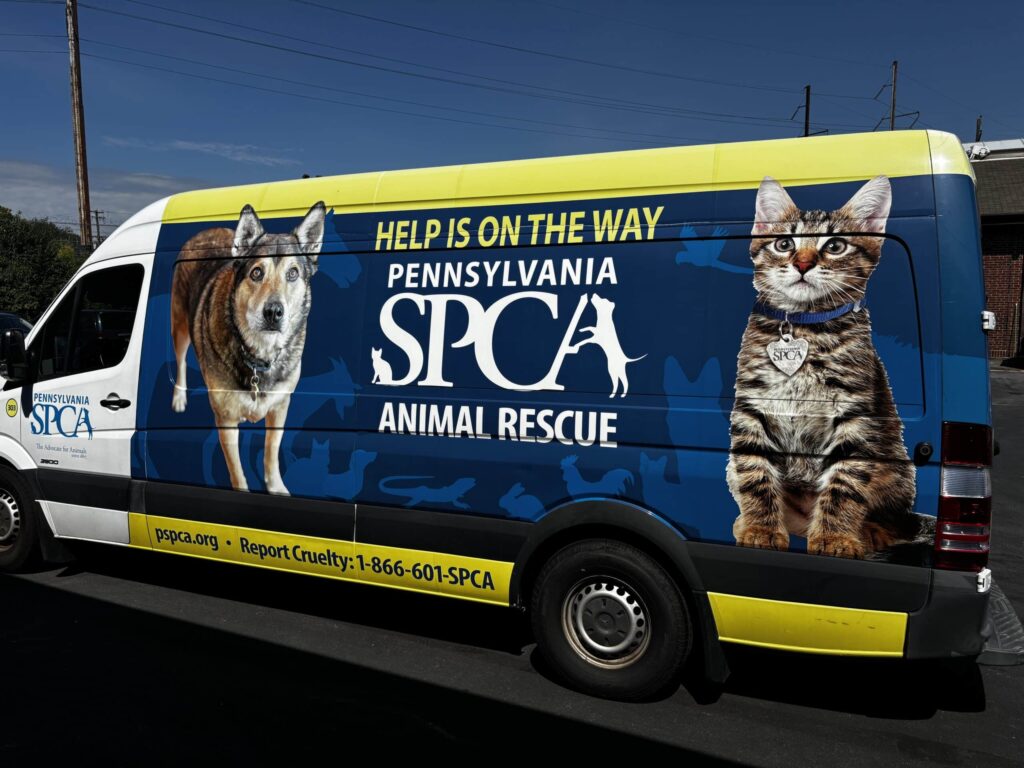
From the moment a report comes in to the day a case is resolved, including how the animals are cared for along the way.

In 2017, a Boston terrier named Libre changed Pennsylvania law. Found starving and left for dead on a Lancaster County dog-breeding farm, Libre’s story moved lawmakers to act — and that June, Governor Wolf signed Libre’s Law, the most significant update to Pennsylvania’s animal cruelty statutes in decades.
Before Libre’s Law, Pennsylvania ranked near the bottom nationally for animal protection — 44th out of 50 states, and one of just three states that didn’t treat first-time extreme cruelty as a felony. The new law changed that: felony charges for first-time cruelty, real limits on outdoor tethering, protections extended to horses, civil immunity for officers and vets who report abuse in good faith, and mandatory forfeiture for convicted abusers. Pennsylvania’s ranking jumped from 44th to 24th in a single year.
Since Libre’s Law took effect, over 52,000 animal abuse offenses have been filed statewide — proof that stronger laws lead to real enforcement, not just words on paper.
Today, our officers enforce Libre’s Law every day across the counties we cover — and Libre’s story is a reminder of how much one animal’s rescue can change for every animal after them.

Laws like Libre’s Law don’t change on their own — they change because people advocate for them. As a 501(c)(3) nonprofit, the PSPCA is limited in the legislative advocacy we can do directly. That’s why we’re proud to support the work of organizations built specifically for that fight.
The Animal Advocacy Academy trains everyday animal lovers to become effective advocates — teaching the real strategy behind how animal laws actually get passed and enforced. One of its founders also happens to sit on our own board, which says a lot about the kind of partners we choose to stand behind.


None of this work is funded by the state. From the officers who respond to reports, to the cases that hold abusers accountable, to our support for the advocates fighting to strengthen these laws — it’s all made possible by people who believe animals deserve better.
